
Sentinel Lymph Node Biopsy in Early-Stage Breast Cancer: ASCO Guideline Clinical Insights
JCO Oncol Pract. 2026 May;22(5):748–754.
In 2025, ASCO published a guideline update on the use of sentinel lymph node biopsy (SLNB) in patients with early-stage breast cancer (stages I and II) treated with up-front breast-conserving surgery.1 This companion article addresses some of the questions that clinicians may face as they implement the recommendations into clinical practice. Key recommendations are included in Figure 1, and the recommendations are presented as algorithms by clinical T stage (T ≤ 2 cm or T > 2 cm) in Figures 2 and 3, respectively.
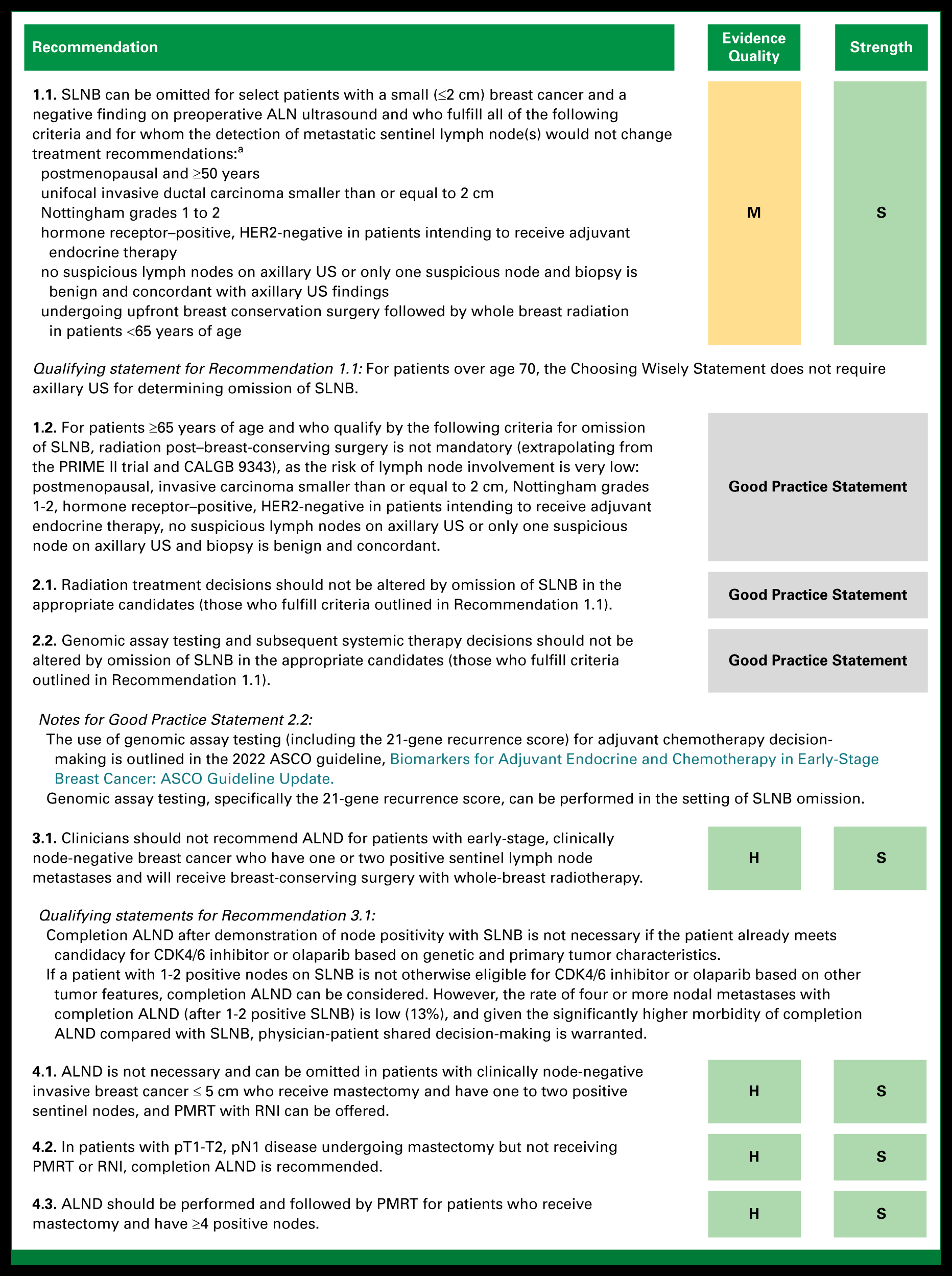
Fig 1. Summary of key recommendations. ALN, axillary lymph node; ALND, axillary lymph node dissection; CDK, cyclin-dependent kinase; cm, centimeter; H, high; HER2, human epidermal growth factor receptor 2; M, moderate; PMRT, postmastectomy radiation; RNI, regional nodal irradiation; S, strong; SLNB, sentinel lymph node biopsy; US, ultrasound. aSee additional qualifying statements in the full guideline.
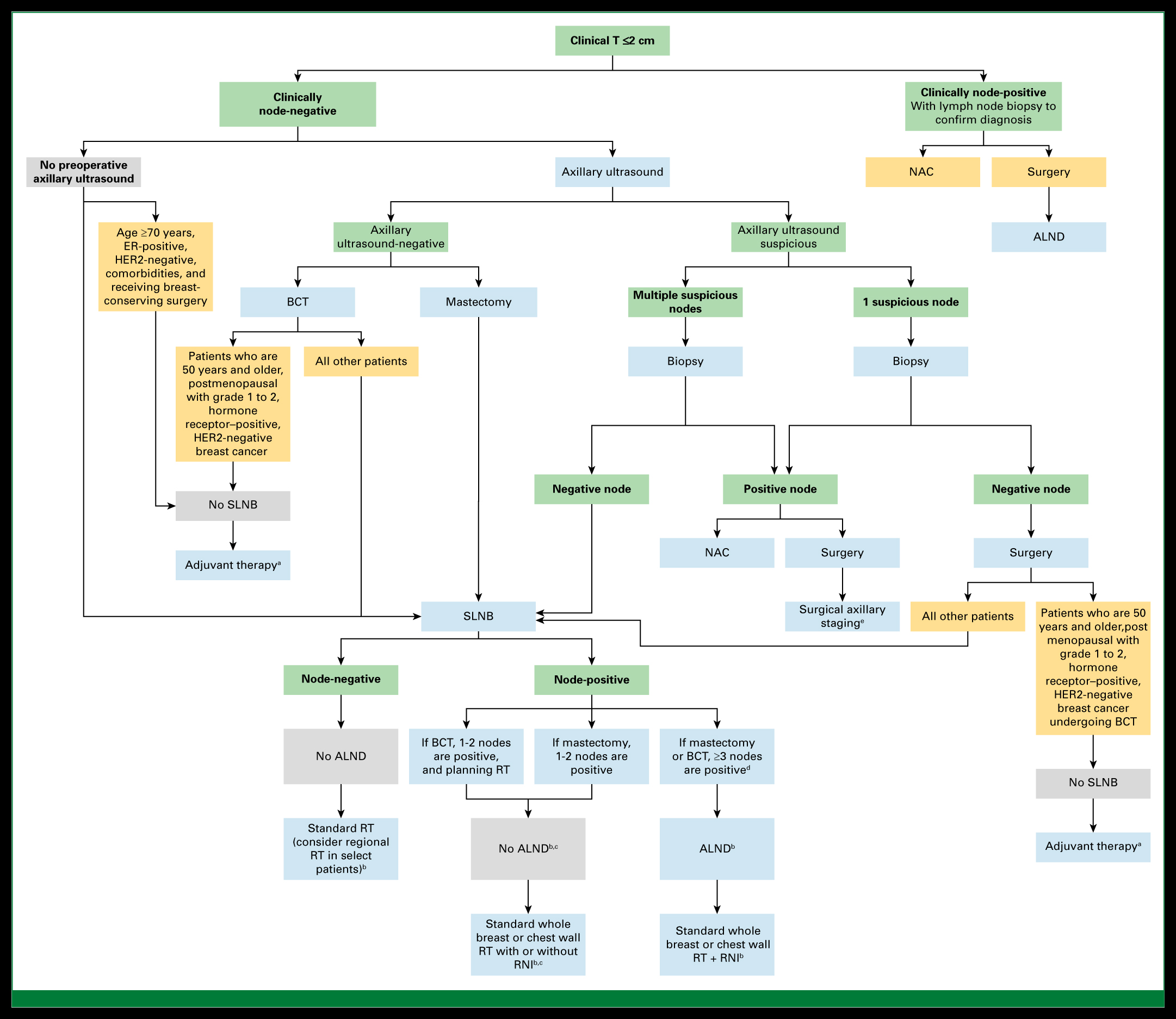
Fig 2. Management of the axilla for patients with clinical T ≤ 2 cm breast cancer. aMultidisciplinary discussion of adjuvant therapy options should occur before surgery when omitting sentinel lymph node biopsy. See the full guideline (section on Systemic and Radiation Treatment Decisions with Omission of SLNB) for expanded discussion. bDecision making should be made on a case-by-case basis and include a patient-centered approach, that is, consider and discuss pros and cons of various options in light of patient’s specific circumstances, values, and preferences. cFull lymph node dissection may mitigate the need for RT in select patients. dPatients with three positive nodes were under-represented in trials evaluating the omission of completion ALND. eThere are no clinical trial data comparing SLNB/targeted axillary dissection (localized removal of clipped biopsy-proven positive node) with complete axillary lymph node dissection at this time, and either may be options for patients. Adapted from the study by Brackstone et al.2 ALND, axillary lymph node dissection; BCT, breast-conserving therapy; ER, estrogen receptor; HER2, human epidermal growth factor receptor 2; NAC, neoadjuvant chemotherapy; PMRT, postmastectomy radiation therapy; RNI, regional nodal irradiation; RT, radiation therapy; SLNB, sentinel lymph node biopsy; US, ultrasound.
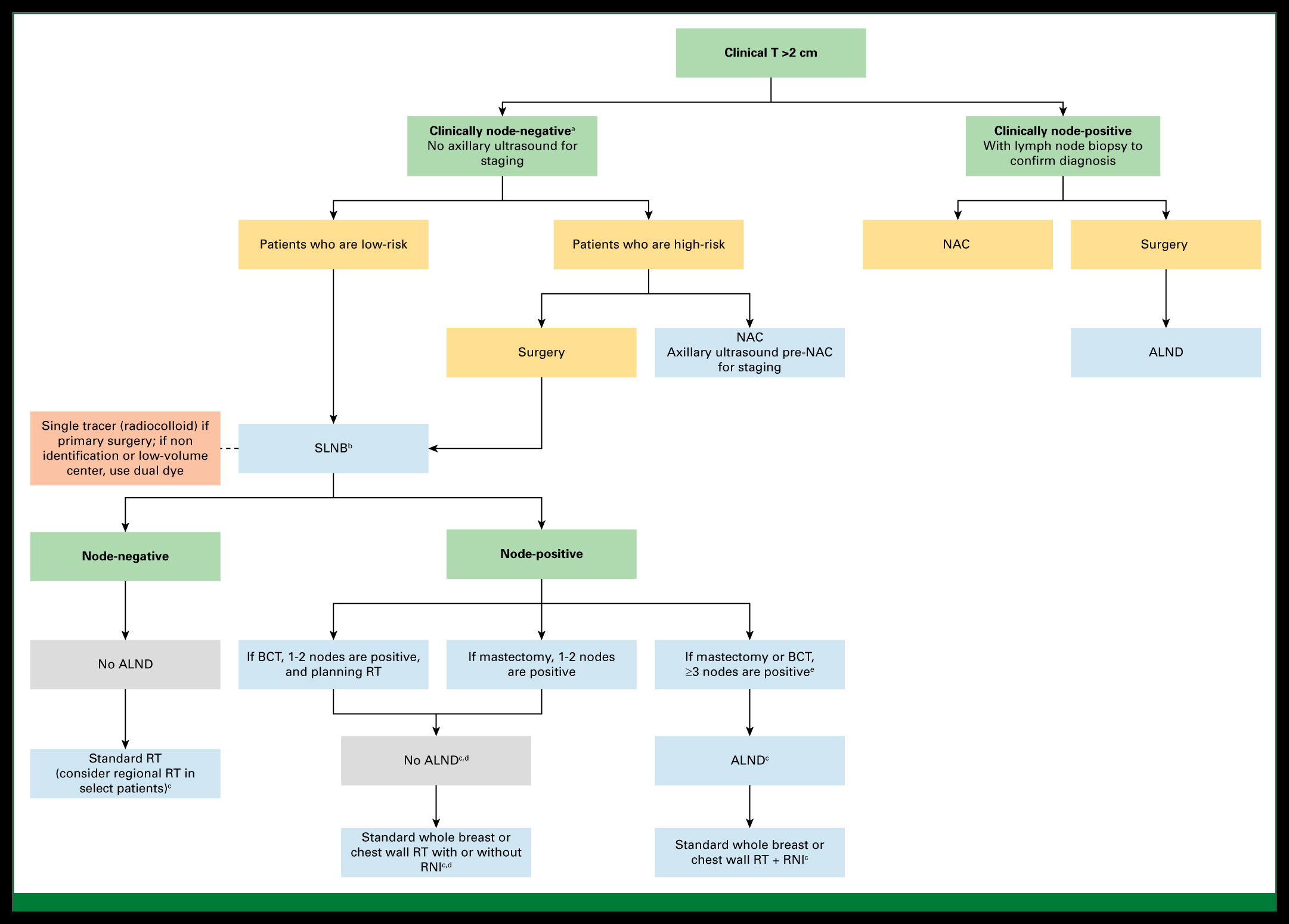
Fig 3. Management of the axilla for patients with clinical T > 2 cm breast cancer. aRefers to all patients with no palpable axillary nodes on physical examination, including those who might have had an ultrasound that was equivocal, abnormal, or even biopsy-proven positive. bDo not recommend SLNB before chemotherapy except in special circumstances after multidisciplinary discussion. cDecision making should be made on a case-by-case basis and include a patient-centered approach, that is, consider and discuss pros and cons of various options in light of patient’s specific circumstances, values, and preferences. dFull lymph node dissection may mitigate the need for RT in select patients. ePatients with three positive nodes were under-represented in trials evaluating the omission of completion ALND. Adapted from the study by Brackstone et al.2 ALND, axillary lymph node dissection; BCT, breast-conserving therapy; NAC, neoadjuvant chemotherapy; RT, radiation therapy; SLNB, sentinel lymph node biopsy; US, ultrasound.
WHY OMIT SLNB? BALANCING BENEFITS VERSUS POTENTIAL HARMS
Historically, the primary function of axillary surgery in early-stage breast cancer was for local-regional control, staging, and to inform adjuvant therapy decision-making. However, the recent SOUND (Sentinel Node v Observation After Axillary Ultra-Sound3) and INSEMA (Intergroup Sentinel Mamma)4 trials have demonstrated that SLNB does not necessarily improve cancer control or survival outcomes. This raises the question: should SLNB be routinely performed, or can it be safely omitted in certain cases?
The primary reason for de-escalating axillary surgery stems from the potential lifelong morbidities associated with axillary surgery. While the risk is significantly lower with SLNB compared to axillary lymph node dissection, patients report both short-term and long-term postoperative morbidities even after SLNB (eg, pain, wound infection, axillary cording, webbing, and extremity complications).5 In the SENOMAC trial, at the early postoperative period, 22% of patients undergoing SLNB reported moderate to very severe arm dysfunction (measured with the Lymphedema Functioning Disability and Health [Lymph-ICF]) and, at 1 year follow-up, 13% reported persistent moderate to very severe problems.6 In the INSEMA trial, 24.5% of patients undergoing SLNB experienced a surgical complication, such as seroma, hematoma, arm or shoulder mobility restrictions and pain, or paresthesia.7 Compared to no SLNB, patients experienced a significant increase in arm and breast symptoms after SLNB and the difference persisted at 18 months posttreatment. Similarly, in the SOUND trial, patients undergoing SLNB experienced significantly higher postoperative disability of the ipsilateral upper limb compared to the no SLNB group.8
Breast cancer–related lymphedema (BCRL) is an unpredictable complication that can happen years after any axillary surgery.9 After SLNB, one in four may experience subclinical lymphedema, with one in eight of these patients progressing to BCRL.10 BCRL is accompanied by multiple morbidities and associated with risk of infection, restricted mobility, significant financial toxicity, and decreased quality of life and psychosocial well-being.11,12 The best way to prevent BCRL is to omit axillary surgery altogether.
The decision to omit SLNB involves a delicate balance between the need for accurate staging and the potential harms associated with SLNB. Decision-making for optimal therapy should balance risk of cancer recurrence, morbidity of treatment, patient preferences (including risk aversion versus tolerance), and multidisciplinary clinicians’ input. There are clear scenarios wherein adjuvant therapy decision-making will be drastically altered based on the sentinel lymph node (SLN) status. The ASCO guideline1 outlines the scenarios wherein SLNB is not routinely required as the SLN is unlikely to be involved with metastatic carcinoma and, even if involved, a positive SLN is unlikely to drastically alter adjuvant therapy decisions.
HOW DOES SLNB IMPACT RADIATION THERAPY DECISIONS?
Radiation oncologists may face management challenges regarding adjuvant therapy decisions after the omission of SLNB. Following the publication of the 2016 Choosing Wisely13 recommendation to avoid routine use of SLNB in older women (≥70 years) with low-risk, early-stage breast cancer treated with lumpectomy, radiation oncologists began to think about the implications of ommission of SLNB on radiation treatment decisions. Without level I evidence, radiation oncologists were left to extrapolate from other studies on how best to incorporate treatment of the axilla for patients in whom SLNB was omitted: either through citing the radiation omission trial CALGB 934314 for which no axillary surgery was permissible, or ACOSOG Z0011,15 for which regional nodal irradiation was prohibited by protocol even if a positive SLN was found.16 The lack of level I evidence to guide radiation decisions in instances of SLNB omission may, in part, explain why SLNB and radiation continue to be performed for the population defined by Choosing Wisely in 2016. In fact, up to 87% of patients who are eligible for SLNB omission continue to receive this procedure.17–19 Similarly, older patients eligible for radiation omission continue to receive it. High utilizers of SLNB are likely to be high utilizers of RT.14,19–21
The publications of INSEMA4 and SOUND3 provide radiation oncologists with solid clinical evidence for avoiding axillary-directed radiation for those patients who were well-represented on both studies. Despite the inclusion of patients with cT2 disease within INSEMA’s study, only 9.6% of the 4,858 enrolled patients had cT2 disease. Both the SOUND and INSEMA trials had equivalent median pathologic tumor sizes reported at 1.1 cm with a small minority of patients having either triple-negative or human epidermal growth factor receptor 2 (HER2)-positive disease. Notably, the INSEMA trial investigators collected radiation records and performed quality assurance. They noted that patients did not receive intentional treatment to level II of the axilla and likely incidental treatment of the level I axilla due to the tangential breast radiation fields. The median incidental radiation dose to axillary level I and II was 85% and 15%, respectively, with therapeutic doses (>80% of prescribed dose) to axillary level I in the majority of patients despite planning per protocol and contemporary 3D techniques.22
Although incidental treatment of the level I axilla occurred within the whole breast irradiation (WBI) tangential fields used in all patients on the INSEMA trial and the majority of patients on the SOUND trial, intentional radiation treatment of the level I/II axilla does not appear warranted in patients who are appropriate candidates for omission of SLNB, as approximately 85% of these patients will have node negative disease. However, the next question is whether partial breast irradiation (PBI) is a viable alternative to WBI for these same patients, many of whom are eligible due to their low-risk disease which is presumably node negative. The recent American Society for Radiation Oncology guideline23 endorses PBI in select patients with tumors who meet the following criteria, which have considerable overlap with the patients well-represented in the SOUND and INSEMA studies:
- 40 years or older
- tumors smaller than 2 cm
- grade 1 to 2 ductal carcinoma in situ and invasive carcinoma
- estrogen receptor-positive, HER2-negative
- no lymph node involvement.
Notably, INSEMA prohibited the use of PBI whereas approximately 10% of patients on SOUND received PBI in the form of intraoperative radiotherapy. Although the majority of patients treated on these trials received WBI, it is conceivable that some radiation oncologists may comfortably treat patients well represented on the INSEMA and SOUND trials (<2 cm, estrogen receptor-positive) with PBI assuming that nodes would be negative if a SLNB was performed; however, for such cases, the dose to axillary level I would be significantly less with PBI than with WBI.
HOW DOES SLNB OMISSION IMPACT SYSTEMIC THERAPY DECISIONS?
One hesitancy for omitting SLNB is due to the concern for a false-negative axillary ultrasound (US). In the SOUND3 and INSEMA4 trials, approximately 15% still had nodal disease after a negative preoperative axillary US. However, with negative predictive values ranging from 86% to 98.4%, axillary US is useful in excluding high axillary nodal burden,24–30 and, in fact, <1% of all patients on the INSEMA4 and SOUND3 trials had pN2 disease or higher after a negative axillary US. Considering the false-negative rate of SLNB is upward of 10%, the benefit of the additional accuracy in axillary evaluation with SLNB compared to axillary US is small.31–33 Clinicopathologic factors associated with greater rates of false-negative axillary US including greater tumor size and grade, tumor multifocality, lobular histology, and presence of lymphovascular invasion should be considered when deciding to omit SLNB.28,34 Similarly, patient factors which may limit the extent of US evaluation and affect the negative predictive value, such as body habitus or extremity immobility, should also be considered.35
Importantly, even in the case of a false-negative US result, the ultimate oncologic recommendations and outcomes for patients are likely unaltered in most patients.32,33 Since the use of genomic assay testing (eg, 21-gene recurrence score) to guide adjuvant systemic therapy decisions was not part of routine clinical practice for patients with hormone receptor-positive, HER2-negative breast cancer at the time of either the SOUND or INSEMA clinical trials, both trials lack information about genomic assay testing. In fact, the majority of patients did not receive adjuvant chemotherapy; chemotherapy was administered in just 18.8% of patients in the SOUND trial and in just 12.4% of patients in the INSEMA trial. For postmenopausal patients meeting RxPONDER36 and TAILORx37,38 criteria, adjuvant chemotherapy decisions are predominantly guided by genomic assay testing, specifically the 21-gene recurrence score, which can be performed in the setting of SLNB omission. Thus, the postmenopausal patients outlined in Clinical Question 1.1 of the ASCO guideline1 are unlikely to have pN2 disease (based on clinical-pathologic features and axillary US findings), which is why surgical axillary staging information is not always necessary for adjuvant chemotherapy decision making in these select patients.
As newer cyclin dependent kinase 4/6 inhibitor agents and different adjuvant chemotherapy regimens are tested for early-stage breast cancer with higher biologic risk of recurrence, SLNB may be informative only in a few select cases. For instance, the monarchE study demonstrated the efficacy of abemaciclib in patients having ≥4 positive lymph nodes or 1-3 positive lymph nodes with additional high-risk features (eg, grade 3 disease, tumor size ≥5 cm, or Ki-67 ≥20%).39 This population is not the same for whom omission of SLNB would be considered according to the ASCO guideline.1 Similarly, the NATALEE trial demonstrating benefit of ribociclib included 59.6% of patients with anatomic stage III disease and only 19.6% with anatomic stage IIA disease.40 For T1 disease to upstage into anatomic stage III (for ribociclib consideration), the patient would need to have pN2 disease. In both the SOUND and INSEMA trials, <1% of the population upgraded to pN2 disease after a negative axillary US.
WHAT DOES SHARED DECISION-MAKING LOOK LIKE IN ERA OF SLNB OMISSION?
Incorporating shared decision-making into the management of early-stage breast cancer is crucial, particularly when considering the omission of SLNB. The shared decision is not only between the patient and the surgeon, but should occur also among the multidisciplinary team weighing the probability of a false-negative axillary US, the potential for under versus over treatment, and the consequences of omission of SLNB and the adjuvant therapy decisions considering the patient’s overall life expectancy and goals of care.
Shared decision-making is particularly important when there is uncertainty in the evidence. This is especially true for subsets that were less represented in the SOUND3 and INSEMA4 clinical trials—specifically, those with invasive lobular carcinoma, patients under 50 years of age, grade 3 disease, and tumor sizes >2 cm. Based on currently available data, confidently recommending the omission of SLNB in the lobular subtype is challenging. While the SOUND and INSEMA trials did include the lobular subtype (8.5% in SOUND and 12.7% in INSEMA), which is comparable to the expected rate in the population, the forest plot from the INSEMA trial indicates a wide CI that crosses one for the lobular subtype. As future clinical trials regarding the omission of SLNB mature,41–44 we may gain further confidence in including these subsets.
The decision to right-size axillary surgery, radiation, endocrine therapy, or systemic therapy has become highly individualized. In a study that evaluated the cost-effectiveness of observation versus SLNB in negative axillary US in postmenopausal women with cT1-T2 N0, hormone receptor-positive, HER2-negative breast cancer, observation was superior to SLNB.45 Thus, if there is a very low probability of a positive SLN and a high risk for complications from WBI (eg, large breast), then it may be safe to omit SLNB and recommend PBI. There may be instances when return to the operating room is warranted after initial breast-conserving surgery. For cases in which the final surgical pathology differs from the initial biopsy result-for example, the biopsy initially showed grade 2 invasive carcinoma, but final pathology showed grade 3 disease with other high-risk features such as lymphovascular invasion—omission of axillary staging is not recommended and further surgery to complete a SLNB is warranted. This is especially important where systemic and radiation decisions would be affected. These examples highlight that there is no “one-size-fits-all” approach to managing the axilla in early-stage breast cancer. Determining which therapy to recommend requires multidisciplinary review and clinical equipoise to personalize care.
REFERENCES
Park KU, Somerfield MR, Anne N, et al: Sentinel lymph node biopsy in early-stage breast cancer: ASCO guideline update. J Clin Oncol 43:1720-1741, 2025 | |
Brackstone M, Baldassarre FG, Perera FE, et al: Management of the axilla in early-stage breast cancer: Ontario Health (Cancer Care Ontario) and ASCO Guideline. J Clin Oncol 39:3056-3082, 2021 | |
Gentilini OD, Botteri E, Sangalli C, et al: Sentinel lymph node biopsy vs No axillary surgery in patients with small breast cancer and negative results on ultrasonography of axillary lymph nodes: The SOUND randomized clinical trial. JAMA Oncol 9:1557-1564, 2023 | |
Reimer T, Stachs A, Veselinovic K, et al: Axillary surgery in breast cancer—Primary results of the INSEMA trial. N Engl J Med 392:1051-1064, 2025 | |
Laws A, Lagendijk M, Grossmith S, et al: Long-term patient-reported arm symptoms in breast cancer survivors. Ann Surg Oncol 31:1623-1633, 2024 | |
Appelgren M, Sackey H, Wengstrom Y, et al: Patient-reported outcomes one year after positive sentinel lymph node biopsy with or without axillary lymph node dissection in the randomized SENOMAC trial. Breast 63:16-23, 2022 | |
Reimer T, Stachs A, Veselinovic K, et al: Patient-reported outcomes for the Intergroup Sentinel Mamma study (INSEMA): A randomised trial with persistent impact of axillary surgery on arm and breast symptoms in patients with early breast cancer. EClinicalMedicine 55:101756, 2023 | |
Gentilini O, Botteri E, Dadda P, et al: Physical function of the upper limb after breast cancer surgery. Results from the SOUND (Sentinel node vs. Observation after axillary Ultra-souND) trial. Eur J Surg Oncol 42:685-689, 2016 | |
McLaughlin SA, Wright MJ, Morris KT, et al: Prevalence of lymphedema in women with breast cancer 5 years after sentinel lymph node biopsy or axillary dissection: Objective measurements. J Clin Oncol 26:5213-5219, 2008 | |
Bucci LK, Brunelle CL, Bernstein MC, et al: Subclinical lymphedema after treatment for breast cancer: Risk of progression and considerations for early intervention. Ann Surg Oncol 28:8624-8633, 2021 | |
DiSipio T, Rye S, Newman B, et al: Incidence of unilateral arm lymphoedema after breast cancer: A systematic review and meta-analysis. Lancet Oncol 14:500-515, 2013 | |
Wang T, Dossett LA: Incorporating value-based decisions in breast cancer treatment algorithms. Surg Oncol Clin N Am 32:777-797, 2023 | |
SSO: Choosing, Wisely: Five Things Physicians and Patients Should Question. 2021. https://www.surgonc.org/wp-content/uploads/2024/04/FINAL_Choosing_Wisely_5.30.23-SSO-5things-List_2021-Updates.pdf | |
Hughes KS, Schnaper LA, Bellon JR, et al: Lumpectomy plus tamoxifen with or without irradiation in women age 70 years or older with early breast cancer: Long-term follow-up of CALGB 9343. J Clin Oncol 31:2382-2387, 2013 | |
Giuliano AE, Ballman KV, McCall L, et al: Effect of axillary dissection vs No axillary dissection on 10-year overall survival among women with invasive breast cancer and sentinel node metastasis: The ACOSOG Z0011 (alliance) randomized clinical trial. JAMA 318:918-926, 2017 | |
Jagsi R, Chadha M, Moni J, et al: Radiation field design in the ACOSOG Z0011 (alliance) trial. J Clin Oncol 32:3600-3606, 2014 | |
Wang T, Mott N, Miller J, et al: Patient perspectives on treatment options for older women with hormone receptor-positive breast cancer: A qualitative study. JAMA Netw Open 3:e2017129, 2020 | |
Wang T, Bredbeck BC, Sinco B, et al: Variations in persistent use of low-value breast cancer surgery. JAMA Surg 156:353-362, 2021 | |
Bredbeck BC, Mott NM, Wang T, et al: Facility-level variation of low-value breast cancer treatments in older women with early-stage breast cancer: Analysis of a statewide claims registry. Ann Surg Oncol 29:4155-4164, 2022 | |
Kunkler IH, Williams LJ, Jack WJL, et al: Breast-conserving surgery with or without irradiation in early breast cancer. N Engl J Med 388:585-594, 2023 | |
Yussof I, Mohd Tahir NA, Hatah E, et al: Factors influencing five-year adherence to adjuvant endocrine therapy in breast cancer patients: A systematic review. Breast 62:22-35, 2022 | |
Hildebrandt G, Stachs A, Gerber B, et al: Central review of radiation therapy planning among patients with breast-conserving surgery: Results from a quality assurance process integrated into the INSEMA trial. Int J Radiat Oncol Biol Phys 107:683-693, 2020 | |
Shaitelman SF, Anderson BM, Arthur DW, et al: Partial breast irradiation for patients with early-stage invasive breast cancer or ductal carcinoma in situ: An ASTRO clinical practice guideline. Pract Radiat Oncol 14:112-132, 2024 | |
Jackson RS, Mylander C, Rosman M, et al: Normal axillary ultrasound excludes heavy nodal disease burden in patients with breast cancer. Ann Surg Oncol 22:3289-3295, 2015 | |
van Nijnatten TJA, Ploumen EH, Schipper RJ, et al: Routine use of standard breast MRI compared to axillary ultrasound for differentiating between no, limited and advanced axillary nodal disease in newly diagnosed breast cancer patients. Eur J Radiol 85:2288-2294, 2016 | |
Abe H, Schacht D, Sennett CA, et al: Utility of preoperative ultrasound for predicting pN2 or higher stage axillary lymph node involvement in patients with newly diagnosed breast cancer. AJR Am J Roentgenol 200:696-702, 2013 | |
Neal CH, Daly CP, Nees AV, et al: Can preoperative axillary US help exclude N2 and N3 metastatic breast cancer? Radiology 257:335-341, 2010 | |
Rukanskienė D, Veikutis V, Jonaitienė E, et al: Preoperative axillary ultrasound versus sentinel lymph node biopsy in patients with early breast cancer. Medicina (Kaunas) 56:127, 2020 | |
Artmoniene D, Bogusevicius A, Jonaitiene E, et al: Breast cancer: The accuracy of the Paus in detecting pN2 and factors that lead to the true- and false-negative results. Biomed J Sci Tech Res 12: 1-9, 2019 | |
Man V, Luk WP, Fung LH, et al: The role of pre-operative axillary ultrasound in assessment of axillary tumor burden in breast cancer patients: A systematic review and meta-analysis. Breast Cancer Res Treat 196:245-254, 2022 | |
Kataria K Srivastava A, Qaiser D: What is a false negative sentinel node biopsy: Definition, reasons and ways to minimize it? Indian J Surg 78:396-401, 2016 | |
Giannakou A, Kantor O, Park KU, et al: Real-world implications of the SOUND trial. Ann Surg Oncol 31:8776-8785, 2024 | |
Tucker NS, Cyr AE, Ademuyiwa FO, et al: Axillary ultrasound accurately excludes clinically significant lymph node disease in patients with early stage breast cancer. Ann Surg 264:1098-1102, 2016 | |
Keelan S, Heeney A, Downey E, et al: Breast cancer patients with a negative axillary ultrasound may have clinically significant nodal metastasis. Breast Cancer Res Treat 187:303-310, 2021 | |
Macaione I, Galvano A, Graceffa G, et al: Impact of BMI on preoperative axillary ultrasound assessment in patients with early breast cancer. Anticancer Res 40:7083-7088, 2020 | |
Kalinsky K, Barlow WE, Gralow JR, et al: 21-Gene assay to inform chemotherapy benefit in node-positive breast cancer. N Engl J Med 385:2336-2347, 2021 | |
Sparano JA, Gray RJ, Makower DF, et al: Adjuvant chemotherapy guided by a 21-gene expression assay in breast cancer. N Engl J Med 379:111-121, 2018 | |
Sparano JA, Gray RJ, Ravdin PM, et al: Clinical and genomic risk to guide the use of adjuvant therapy for breast cancer. N Engl J Med 380:2395-2405, 2019 | |
Rastogi P, O’Shaughnessy J, Martin M, et al: Adjuvant abemaciclib plus endocrine therapy for hormone receptor-positive, human epidermal growth factor receptor 2-negative, high-risk early breast cancer: Results from a preplanned monarchE overall survival interim analysis, including 5-year efficacy outcomes. J Clin Oncol 42:987-993, 2024 | |
Slamon D, Lipatov O, Nowecki Z, et al: Ribociclib plus endocrine therapy in early breast cancer. N Engl J Med 390:1080-1091, 2024 | |
van Roozendaal LM, Vane MLG, van Dalen T, et al: Clinically node negative breast cancer patients undergoing breast conserving therapy, sentinel lymph node procedure versus follow-up: A Dutch randomized controlled multicentre trial (BOOG 2013-08). BMC Cancer 17:459, 2017 | |
Clinicaltrials.gov: Sentinel Node Biopsy Vs Observation After Axillary PET. 2025 | |
Jung JG, Ahn SH, Lee S, et al: No axillary surgical treatment for lymph node-negative patients after ultra-sonography [NAUTILUS]: Protocol of a prospective randomized clinical trial. BMC Cancer 22:189, 2022 | |
Araújo DCM, Duarte GM, Jales RM, et al: Sentinel lymph node biopsy vs no axillary surgery in early breast cancer clinically and ultrasonographically node negative: A prospective randomized controlled trial-VENUS trial. Breast J 26:2087-2089, 2020 | |
McEvoy AM, Poplack S, Nickel K, et al: Cost-effectiveness analyses demonstrate that observation is superior to sentinel lymph node biopsy for postmenopausal women with HR + breast cancer and negative axillary ultrasound. Breast Cancer Res Treat 183:251-262, 2020 |